
If you only take one supplement for strength training, creatine is the one most experts would point you to. It is the most studied sports supplement in the world, it is inexpensive, and it works for a wide range of people, from lifters and sprinters to older adults who want to stay strong. Here is what it does, how to take it, and what to ignore.
What creatine is
Creatine is a compound your body makes from amino acids, and you also get it from meat and fish. About 95% of it is stored in your muscles as phosphocreatine, which helps recycle ATP, the energy currency your muscles use for short, hard efforts like a heavy set or a sprint. A supplement tops up those stores beyond what diet alone usually provides.
What the research shows
The International Society of Sports Nutrition calls creatine monohydrate the most effective ergogenic supplement available for increasing high-intensity exercise capacity and lean body mass during training.* In practical terms, fuller muscle creatine stores help you squeeze out an extra rep or two, recover a little faster between sets, and, over weeks of training, build more strength and muscle than training alone.*
Researchers are also studying creatine for brain health, because your brain uses it for energy too. That research is early and promising, but the strongest evidence is still for exercise performance.
How much to take
- Daily dose: 3 to 5 grams a day is the standard, well-studied amount. One 5 g scoop covers it.
- Loading is optional: some people take about 20 g a day (split into four doses) for 5 to 7 days to saturate muscles faster. Skipping the load works just as well; it just takes about three to four weeks to reach the same level.
- Timing matters less than consistency: before or after training, morning or night, take it every day, including rest days.
- Mix it with anything: water, juice or your protein shake.
Myths worth ignoring
“Creatine is a steroid”
No. Creatine is a natural compound found in food and made by your own body. It has no hormonal action.
“It causes bloating and water weight”
Creatine pulls water into your muscle cells, which can show up as a pound or two on the scale in the first weeks. That is water inside the muscle, not puffiness under the skin. Large loading doses are the most common cause of stomach upset, so if that bothers you, skip the load.
“It is bad for your kidneys”
In healthy people, studies lasting up to several years have not found harm to kidney function at recommended doses. Creatine can raise creatinine, a lab marker doctors use to estimate kidney function, so tell your doctor you take it before blood work. If you have kidney disease, talk to your doctor first.
“You need fancy forms”
Creatine HCl, buffered creatine and other forms cost more, but none has been shown to beat plain creatine monohydrate. Monohydrate is the form used in nearly all the research.
Who might benefit most
Anyone doing resistance training, high-intensity interval work or team sports is a good fit. Vegetarians and vegans often see a bigger response because their starting levels tend to be lower. Older adults who lift may also benefit, as creatine plus training supports muscle strength and function as we age.*
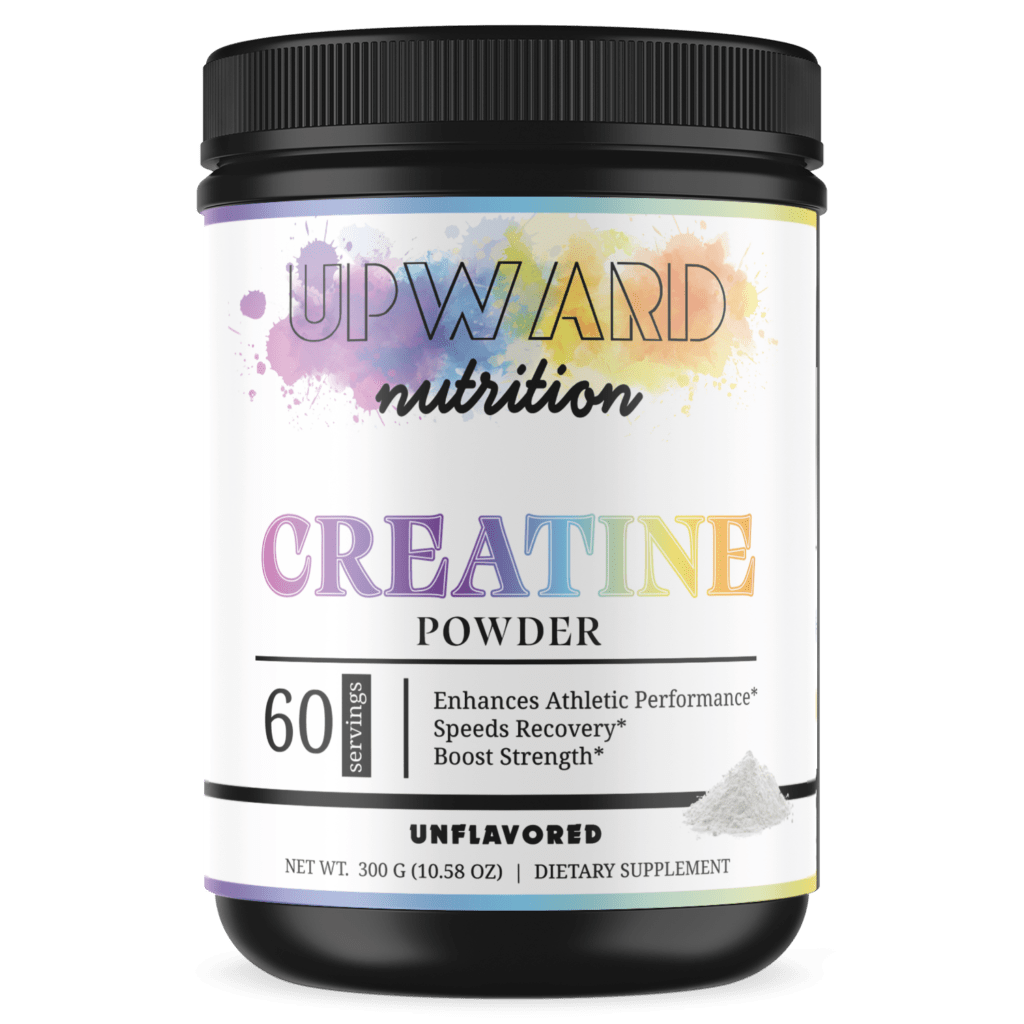
Upward Nutrition Creatine
Our Creatine is pure, unflavored creatine monohydrate, 5 grams per scoop with nothing extra, and 60 servings per tub. It is made in the USA in an FDA-registered, GMP-certified facility and third-party tested for quality and purity. Our Ignite Pre-Workout also includes 2,000 mg of creatine per scoop, so you can count that toward your daily total on training days.
References
- Kreider RB, et al. International Society of Sports Nutrition position stand: safety and efficacy of creatine supplementation in exercise, sport, and medicine. J Int Soc Sports Nutr. 2017;14:18.
- Antonio J, et al. Common questions and misconceptions about creatine supplementation: what does the scientific evidence really show? J Int Soc Sports Nutr. 2021;18:13.
- Candow DG, et al. Effectiveness of creatine supplementation on aging muscle and bone. Nutrients. 2019;11(6):1300.
*These statements have not been evaluated by the Food and Drug Administration. This product is not intended to diagnose, treat, cure, or prevent any disease. This article is for educational purposes and is not medical advice. Talk with your healthcare provider before starting any supplement, especially if you are pregnant or nursing, have a medical condition or take medication.
