
Ashwagandha (Withania somnifera) has been used in Ayurvedic tradition for thousands of years and is now one of the most popular herbal supplements in the U.S. It is known as an “adaptogen,” a plant thought to help the body adapt to stress. With the holidays coming up, it is a timely one to understand.
What it is
Ashwagandha is a small shrub in the nightshade family. Supplements are usually made from the root, sometimes with the leaf. Its active compounds include a group called withanolides, and many extracts are standardized to a set percentage of them.
What the research shows
Stress
Several small clinical trials have found that adults taking ashwagandha root extract for about 6 to 8 weeks reported lower perceived stress than those taking a placebo, and some studies also measured lower cortisol.* Most studies used about 250 to 600 mg of extract a day.
Sleep
Studies suggest ashwagandha may support sleep quality, with somewhat larger effects in people who already had trouble sleeping.* It is not a sedative, and effects build over weeks rather than from a single dose.
Exercise and recovery
A handful of trials in men doing resistance training reported greater gains in strength and muscle size, and better recovery, compared with placebo.* Others have looked at endurance and VO2 max. These are promising, but the studies are small and mostly short, so more research is needed.
Keep expectations realistic
Ashwagandha is not a fix for chronic stress or poor sleep habits. Think of it as support for a routine that already includes sleep, training, food and downtime. Give it at least a few weeks before judging how it works for you.
Safety and who should skip it
In short-term studies, ashwagandha is generally well tolerated; the most common side effects are stomach upset, drowsiness and loose stools. There have been rare reports of liver injury. Talk with your doctor first, or avoid it, if you:
- Are pregnant or breastfeeding
- Have a thyroid condition or take thyroid medication (ashwagandha may raise thyroid hormone levels)
- Have an autoimmune condition
- Take sedatives, blood pressure, blood sugar or immune-suppressing medications
- Have liver problems, or are scheduled for surgery
- Are a tested athlete who needs to check your sport’s rules
Stop and see a doctor if you notice signs like yellowing skin or eyes, dark urine or unusual fatigue.
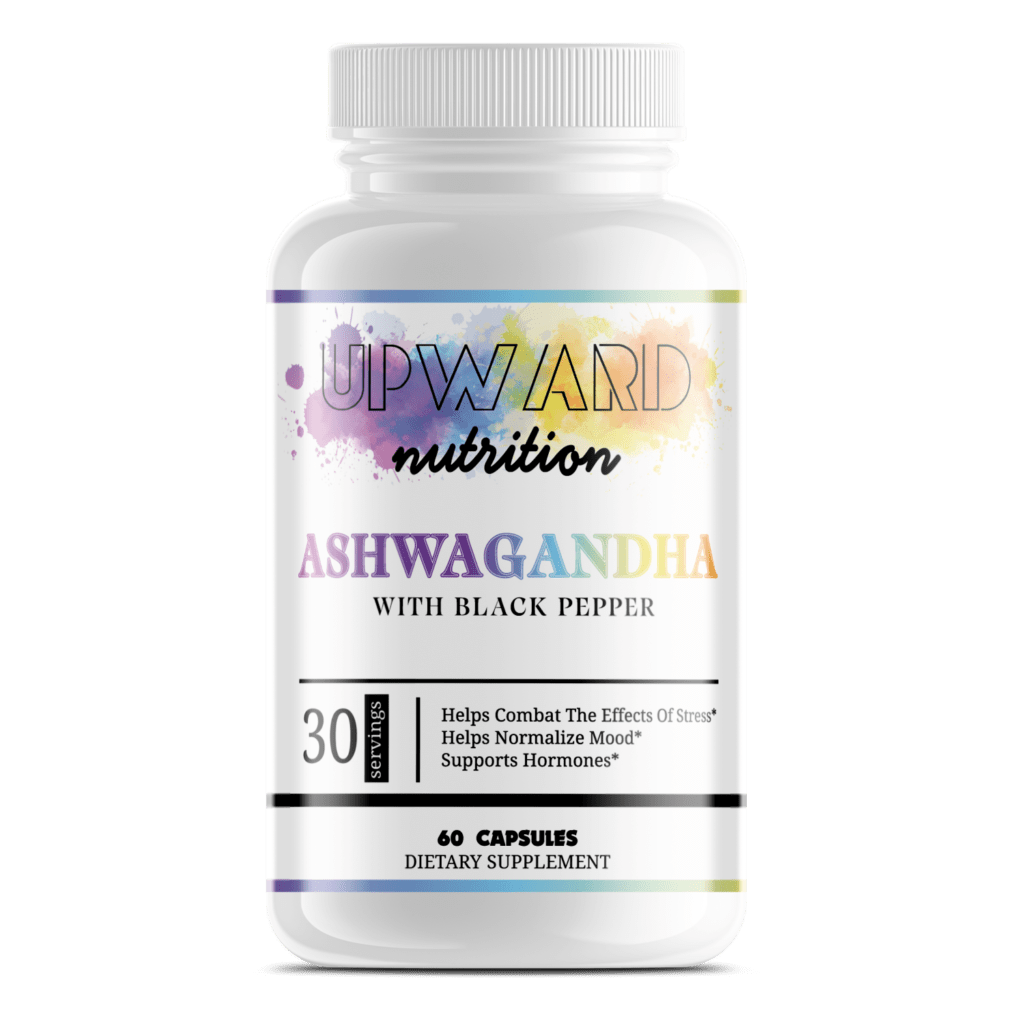
Upward Nutrition Ashwagandha
Our Ashwagandha is made with organic ashwagandha in easy capsules. Prefer a chewable? Ashwagandha Gummies offer the same botanical in a tasty gummy. Both are made in the USA in an FDA-registered, GMP-certified facility and third-party tested for quality and purity.
References
- National Institutes of Health, Office of Dietary Supplements. Ashwagandha: Is It Helpful for Stress, Anxiety, or Sleep? Fact Sheet for Health Professionals.
- Lopresti AL, et al. An investigation into the stress-relieving and pharmacological actions of an ashwagandha (Withania somnifera) extract. Medicine (Baltimore). 2019;98(37):e17186.
- Cheah KL, et al. Effect of ashwagandha (Withania somnifera) extract on sleep: a systematic review and meta-analysis. PLoS One. 2021;16(9):e0257843.
- Wankhede S, et al. Examining the effect of Withania somnifera supplementation on muscle strength and recovery. J Int Soc Sports Nutr. 2015;12:43.
*These statements have not been evaluated by the Food and Drug Administration. This product is not intended to diagnose, treat, cure, or prevent any disease. This article is for educational purposes and is not medical advice. Talk with your healthcare provider before starting any supplement, especially if you are pregnant or nursing, have a medical condition or take medication.
